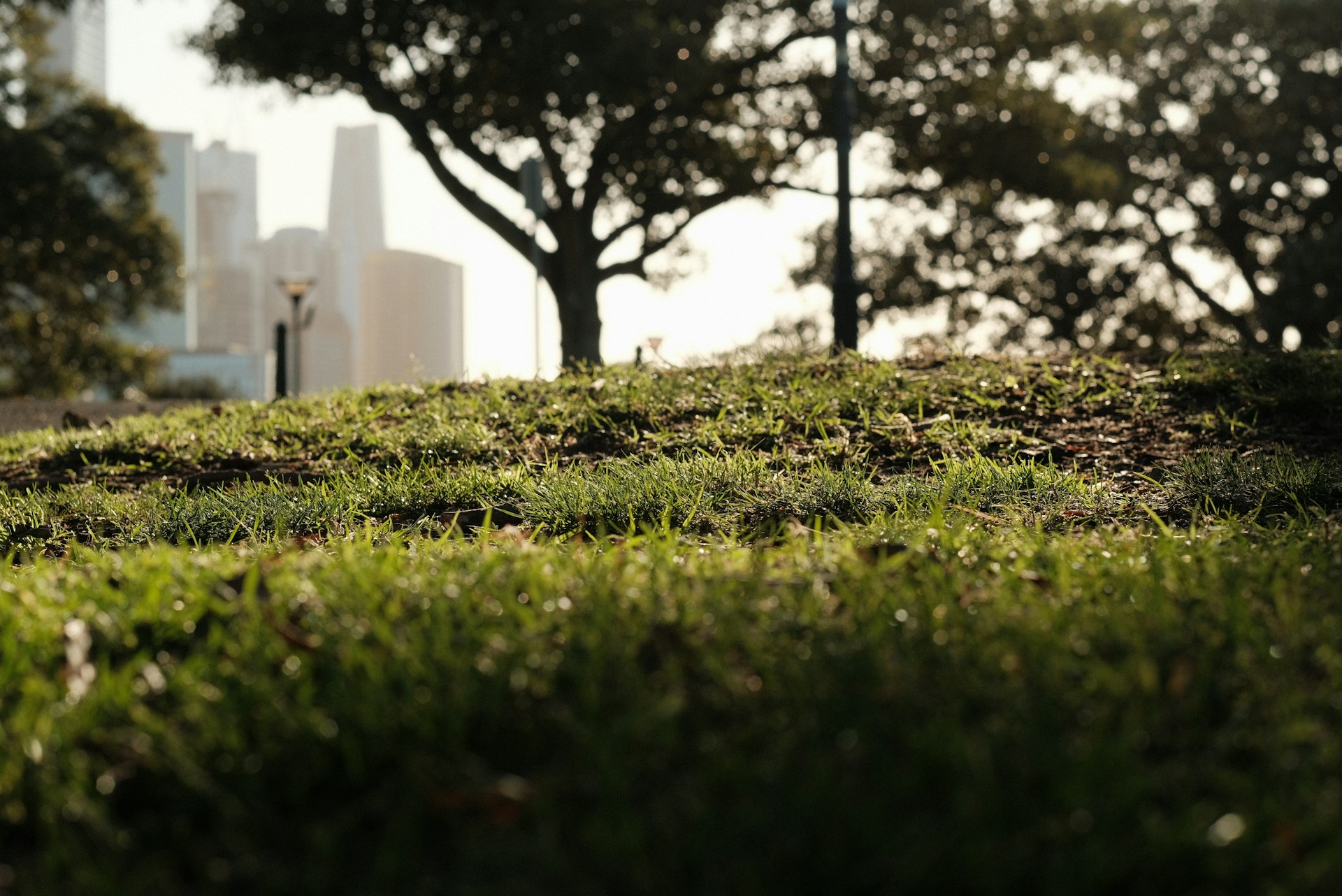
 Photo by Dominic Kurniawan Suryaputra on Unsplash
Understanding Urban Lawn Care Environments
Urban lawn care presents unique challenges that differ significantly from suburban or rural lawn maintenance. Limited space, high foot traffic, pollution, and restricted sunlight all influence how grass grows and survives in city environments. Homeowners, property managers, and businesses searching for lawn care near me in urban areas often require specialized solutions designed for compact and high-use outdoor spaces.
Urban lawns are commonly found in small yards, shared courtyards, rooftops, and green spaces between buildings. These environments demand precise lawn care practices to maintain healthy turf while maximizing visual appeal.
Limited Space and Soil Compaction
One of the most common urban lawn care challenges is limited space combined with severe soil compaction. Frequent foot traffic, construction activity, and heavy equipment compress the soil, restricting air, water, and nutrient movement.
Compacted soil weakens root systems and reduces grass resilience. Core aeration and soil conditioning are essential urban lawn care practices to restore proper soil structure and support healthy growth.
Reduced Sunlight Exposure
Tall buildings, trees, and infrastructure often block sunlight in urban environments. Many city lawns receive only partial or filtered light throughout the day.
Shade stress leads to thin grass, poor color, and increased vulnerability to disease. Selecting shade-tolerant grass varieties and adjusting mowing heights can significantly improve lawn performance in low-light conditions.
Air Pollution and Environmental Stress
Urban lawns are exposed to higher levels of air pollution, dust, and debris from traffic and industrial activity. These pollutants can settle on grass blades and soil, interfering with photosynthesis and nutrient absorption.
Regular lawn maintenance, including proper watering and debris removal, helps reduce pollution-related stress and supports overall turf health.
Watering Restrictions and Drainage Issues
Many cities impose watering restrictions during dry seasons, making consistent lawn hydration a challenge. At the same time, poor drainage caused by compacted soil and paved surfaces can lead to standing water.
Efficient irrigation is critical for urban lawn care. Drip systems, smart irrigation controllers, and deep but infrequent watering help maintain moisture balance without waste.
Heat Retention and Urban Heat Islands
Urban areas often experience higher temperatures due to concrete, asphalt, and building materials that retain heat. This phenomenon, known as the urban heat island effect, places additional stress on lawns.
Heat stress can cause grass discoloration, shallow root growth, and increased water demand. Proper mowing height and soil moisture management help mitigate these effects.
High Foot Traffic and Lawn Wear
Urban lawns frequently endure heavy foot traffic from residents, pets, and visitors. This constant use leads to worn areas, thinning turf, and bare patches.
Traffic-resistant grass types and routine overseeding help restore damaged areas and improve lawn durability. Designated walkways can also reduce stress on high-use zones.
Weed Pressure in Urban Lawns
Weeds thrive in urban environments due to disturbed soil, compacted ground, and open areas. Common urban weeds compete aggressively with grass for nutrients and space.
Preventive weed control, dense turf coverage, and targeted treatments are essential for maintaining a clean and healthy urban lawn.
Pest and Disease Risks
Urban lawns can be more susceptible to pests and diseases due to environmental stress and limited airflow. Grubs, chinch bugs, and fungal infections can quickly damage turf if not addressed.
Integrated pest management strategies focus on monitoring, prevention, and precise treatments to protect urban lawns while minimizing chemical use.
Maintenance Constraints and Time Limitations
Urban homeowners often face tight schedules and limited access to storage for lawn care equipment. Noise restrictions may also limit mowing times.
Professional lawn care services help overcome these challenges by providing efficient, scheduled maintenance using specialized equipment suitable for urban environments.
Eco-Friendly Urban Lawn Care Solutions
Sustainability is a growing priority in cities. Eco-friendly lawn care practices help reduce environmental impact while maintaining attractive green spaces.
Organic fertilizers, reduced chemical treatments, and sustainable mowing practices support soil health and improve long-term lawn resilience in urban settings.
Benefits of Professional Urban Lawn Care
Expert knowledge of city-specific lawn challenges.
Specialized equipment designed for small or shared spaces.
Efficient scheduling that complies with local regulations.
Improved curb appeal in dense urban neighborhoods.
Planning for Long-Term Urban Lawn Health
Successful urban lawn care requires proactive planning and ongoing maintenance. Addressing soil health, managing traffic, and adapting to environmental constraints are key to long-term success.
With the right strategies and support, urban lawns can thrive despite limited space and challenging conditions, providing valuable green spaces that enhance city living and property value.