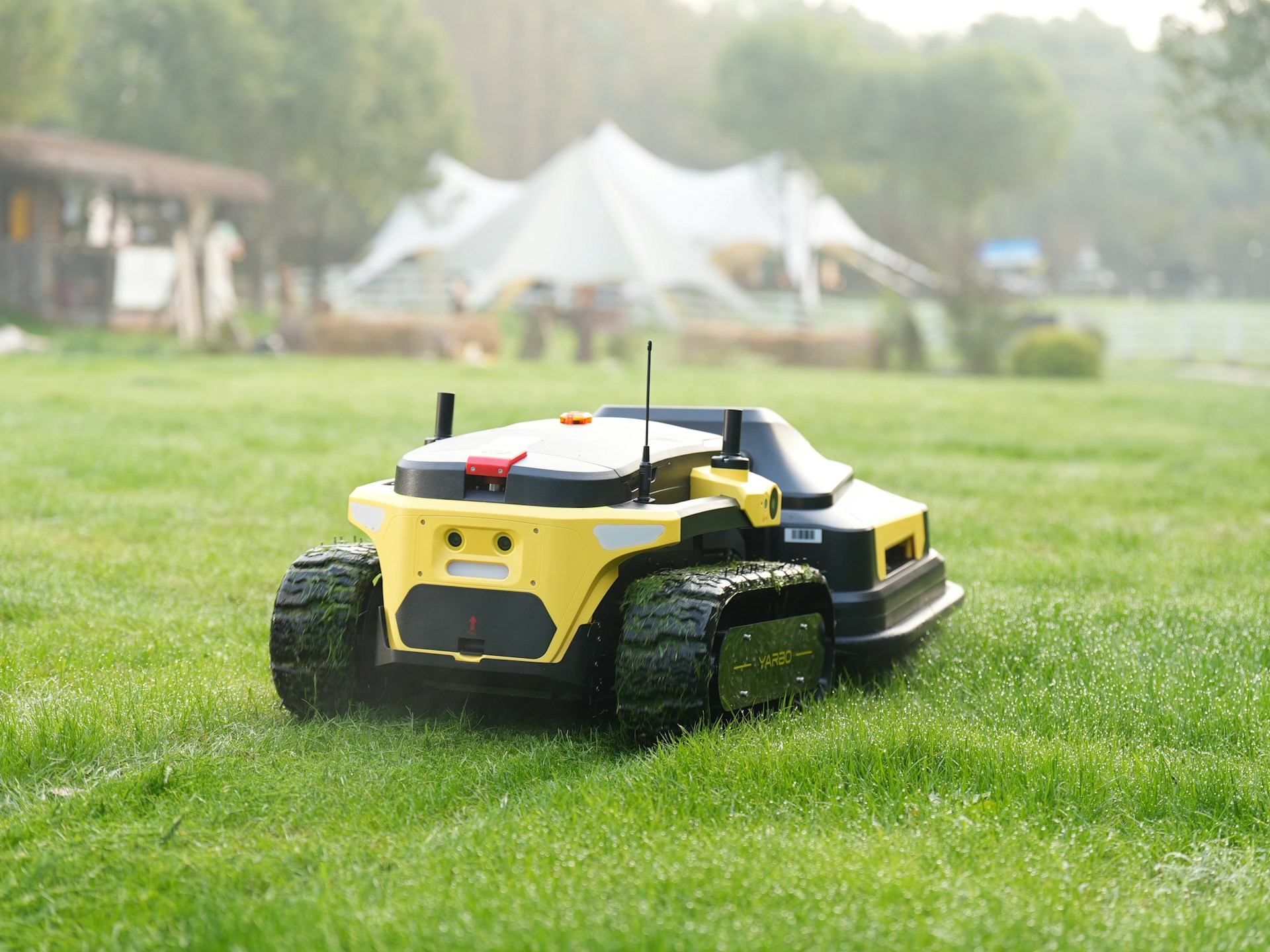
 Photo by Yarbo Global on Unsplash
What Are Robotic Lawn Mowers and How They Work
Robotic lawn mowers are autonomous lawn care machines designed to mow grass with minimal human involvement. These smart devices operate within a defined area, usually set by a boundary wire or GPS-based system, and continuously maintain grass height by mowing small amounts frequently. Instead of cutting large portions at once, robotic mowers trim grass regularly, leaving fine clippings behind to decompose naturally and fertilize the lawn.
Modern robotic lawn mowers use sensors, software, and sometimes artificial intelligence to navigate obstacles, adjust cutting patterns, and return to charging stations automatically. Many models can be controlled through mobile apps, allowing homeowners to schedule mowing times, monitor progress, and customize lawn care settings remotely.
Benefits of Robotic Lawn Mowers
One of the biggest advantages of robotic lawn mowers is convenience. Once installed and programmed, they require very little ongoing effort from the homeowner. This hands-free approach makes them especially appealing for busy homeowners who want a consistently well-maintained lawn without spending time mowing.
Robotic mowers also promote healthier grass growth. Frequent cutting encourages thicker turf and stronger root systems, while mulching clippings naturally enrich the soil. Over time, this can lead to a greener, denser lawn with fewer weeds.
- Time-Saving Automation – Mows automatically without supervision.
- Consistent Lawn Appearance – Maintains uniform grass height at all times.
- Quiet Operation – Significantly quieter than gas or electric mowers.
- Eco-Friendly – Zero emissions and low energy consumption.
- Improved Lawn Health – Continuous mulching improves soil quality.
Costs and Long-Term Investment
The upfront cost of robotic lawn mowers is one of the main concerns for homeowners. These machines typically cost more than traditional electric or gas mowers, especially advanced models with GPS navigation and smart home integration. Installation may also add to the initial expense, particularly for properties requiring complex boundary setups.
However, long-term ownership costs are generally lower. Robotic mowers require no fuel, minimal maintenance, and fewer replacement parts. Over several years, savings on lawn care services, fuel, and maintenance can offset the higher purchase price, making robotic mowers a long-term investment rather than a simple equipment purchase.
Limitations and Potential Drawbacks
Despite their benefits, robotic lawn mowers are not ideal for every lawn. Properties with steep slopes, uneven terrain, or frequent debris may present challenges. While newer models handle obstacles better, fallen branches, toys, or heavy leaf coverage can interfere with performance.
Another limitation is setup complexity. Boundary wire installation requires planning and time, and improper installation can lead to inefficient mowing patterns. Some homeowners may prefer professional installation to ensure optimal results.
- High Initial Cost – More expensive upfront than traditional mowers.
- Setup Requirements – Boundary wire or GPS configuration needed.
- Terrain Limitations – May struggle with very steep or uneven lawns.
- Security Concerns – Risk of theft without proper safeguards.
Robotic Lawn Mowers vs Traditional Lawn Mowers
When comparing robotic lawn mowers to traditional gas or electric mowers, the main difference lies in user involvement. Traditional mowers require manual operation, time commitment, and physical effort. Robotic mowers shift lawn care into the background, allowing homeowners to focus on other tasks.
In terms of performance, robotic mowers excel at maintenance mowing rather than heavy cutting. Lawns that are already well-established and maintained benefit the most. Traditional mowers may still be necessary for initial lawn restoration or seasonal cleanup.
Ideal Lawns and Homeowners for Robotic Mowers
Robotic lawn mowers are best suited for homeowners who value convenience, sustainability, and consistent lawn appearance. They work particularly well on small to medium-sized residential lawns with defined boundaries and relatively even terrain.
Homeowners who travel frequently or prefer a low-maintenance lawn care solution often find robotic mowers especially worthwhile. When paired with professional lawn care services for seasonal tasks such as aeration and fertilization, robotic mowers can become part of a highly efficient lawn care system.
Are Robotic Lawn Mowers Worth It?
Whether robotic lawn mowers are worth it depends on expectations, lawn conditions, and budget. For homeowners seeking a hands-free, eco-friendly solution that delivers consistent results, robotic mowers offer significant value. While the initial investment is higher, the long-term convenience, reduced maintenance, and improved lawn health can justify the cost.
As lawn care technology continues to advance, robotic lawn mowers are becoming more reliable, affordable, and adaptable. For many homeowners, they represent the future of residential lawn care and a smart investment in both time savings and lawn quality.