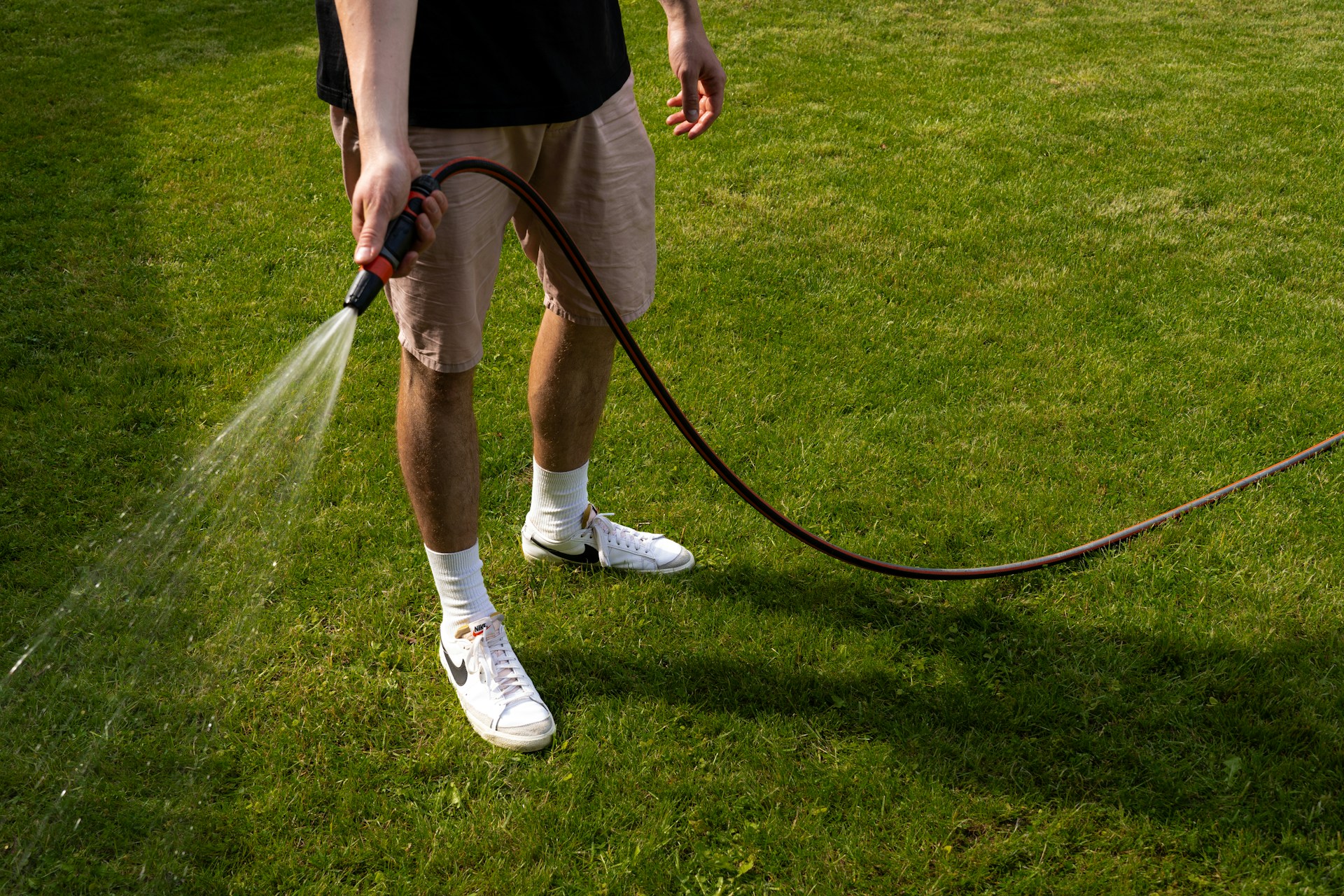
 Photo by Anastasiya Badun on Unsplash
Understanding the Balance Between Overwatering and Underwatering
Maintaining a healthy lawn requires a precise balance of water. Both overwatering and underwatering can cause significant damage to grass, soil structure, and root development. While water is essential for photosynthesis and nutrient transport, too much or too little disrupts natural growth cycles and weakens turf resilience.
Many lawn problems such as yellowing grass, thinning areas, fungal growth, and shallow roots are directly linked to improper watering practices. Recognizing the differences between overwatering and underwatering is critical for long-term lawn health and efficient water use.
What Happens When a Lawn Is Overwatered
Overwatering occurs when a lawn receives more water than the soil and grass roots can absorb. Excess water fills air pockets in the soil, reducing oxygen availability to roots. Without adequate oxygen, roots weaken, rot, and become more susceptible to disease.
Constantly wet soil also encourages the growth of fungi and harmful microorganisms. These conditions create an ideal environment for lawn diseases, moss, and algae, all of which compete with grass for space and nutrients.
Common signs of overwatered lawns include:
- Yellow or pale green grass
- Soft, spongy soil underfoot
- Persistent puddles or runoff
- Increased weed growth
- Fungal diseases such as brown patch
Consequences of Underwatering Lawns
Underwatering happens when grass does not receive enough moisture to support healthy growth. Without sufficient water, grass enters a state of stress and reduces metabolic activity to conserve resources. While short-term drought stress can be reversible, prolonged underwatering leads to permanent turf damage.
Grass roots exposed to dry soil shrink and lose their ability to absorb nutrients efficiently. This weakens the lawn and makes it more vulnerable to heat, pests, and weed invasion.
Typical symptoms of underwatered lawns include:
- Dull, grayish-green or brown grass
- Footprints that remain visible after walking
- Dry, hard soil that repels water
- Thinning turf and bare patches
- Slower growth and poor recovery
How Watering Depth Affects Root Development
Watering depth plays a critical role in distinguishing healthy irrigation from harmful overwatering or underwatering. Shallow watering promotes surface-level roots that dry out quickly, while deep watering encourages roots to grow deeper into the soil profile.
Deep and infrequent watering allows moisture to reach the root zone and trains grass to become more drought-tolerant. In contrast, frequent shallow watering keeps the surface wet while depriving deeper roots of moisture and oxygen.
Soil Type and Its Impact on Watering Practices
Different soil types respond differently to water application. Sandy soils drain quickly and may require slightly more frequent watering, while clay soils retain water longer but are prone to compaction and poor drainage. Understanding soil composition is essential to avoid both overwatering and underwatering.
Compacted soil prevents proper infiltration, leading to runoff and shallow root systems. Aeration and organic matter amendments improve water absorption and help regulate moisture levels more effectively.
Environmental Factors That Influence Water Needs
Climate, temperature, wind, and sun exposure all influence how much water a lawn requires. Hot, windy conditions increase evaporation, while shaded areas retain moisture longer. Seasonal changes also affect water demand, with higher needs during peak growth periods.
Ignoring environmental conditions often leads to overwatering during cooler weather or underwatering during heat waves. Adjusting irrigation schedules based on weather patterns helps maintain optimal soil moisture.
Finding the Right Watering Schedule
The ideal watering schedule depends on grass type, soil condition, and climate. Most lawns benefit from watering early in the morning when evaporation rates are low and water can penetrate deeply into the soil.
Rather than following a fixed schedule, monitoring soil moisture and lawn appearance provides more accurate guidance. A lawn that receives the right amount of water maintains consistent color, elasticity, and density.
Long-Term Effects of Improper Watering
Chronic overwatering weakens root systems, increases disease pressure, and wastes water resources. Underwatering, on the other hand, leads to thinning turf, soil degradation, and long recovery times. Both practices reduce lawn durability and aesthetic quality.
Establishing proper watering habits supports deeper roots, healthier soil biology, and improved resistance to stress. Lawns managed with balanced irrigation require less corrective treatment and remain greener for longer periods.
Best Practices for Balanced Lawn Watering
Achieving the correct balance between overwatering and underwatering requires consistency and observation. Lawns that are watered based on actual needs rather than routine schedules perform better and use water more efficiently.
By understanding the signs of water stress, improving soil conditions, and applying water strategically, homeowners can maintain vibrant, resilient lawns while avoiding the common pitfalls of improper irrigation.