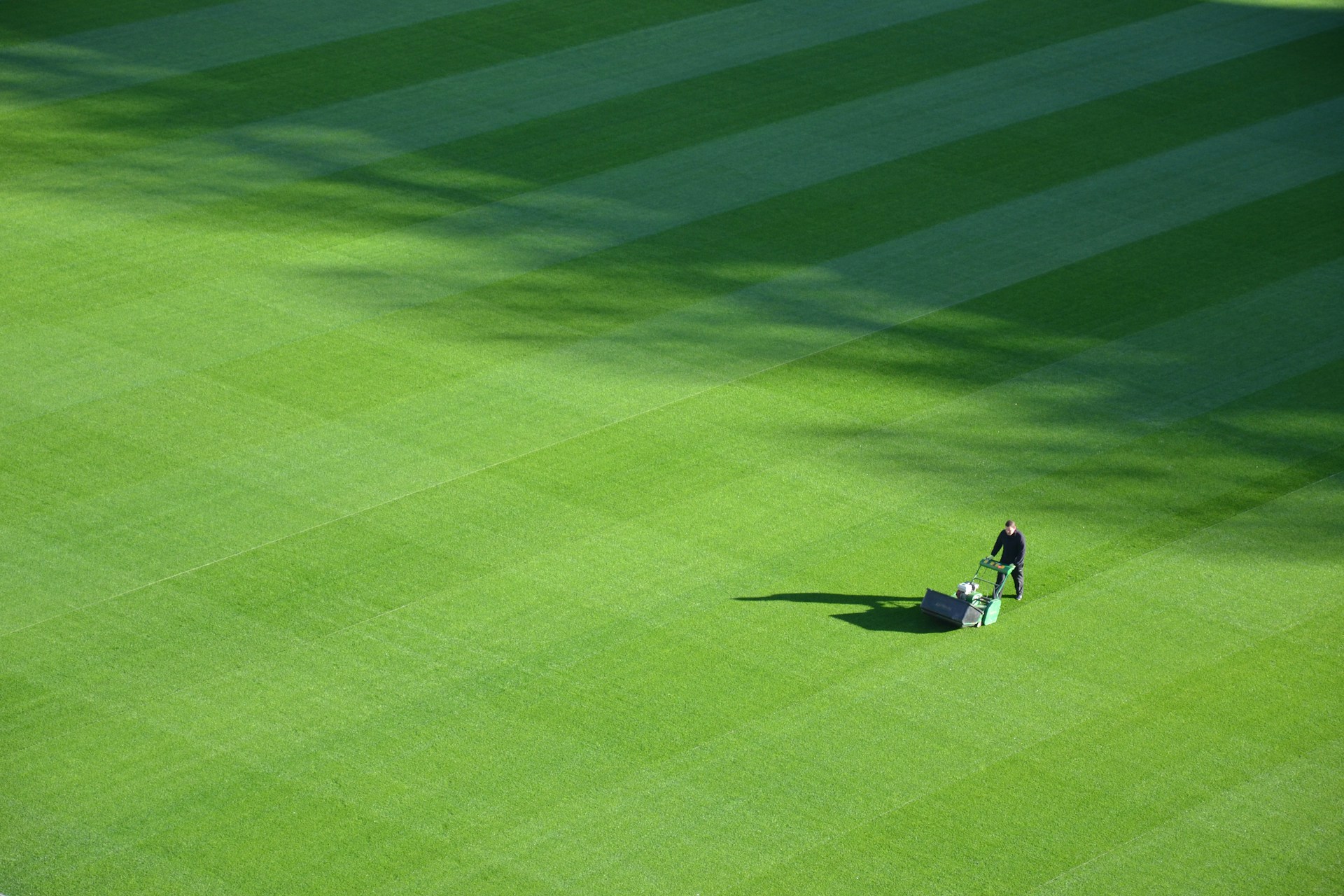
 Photo by Rémi Müller on Unsplash
Why Timing Matters When Mowing Your Lawn
The time of day you mow your lawn has a direct impact on grass health, appearance, and long-term durability. Mowing at the wrong time can stress turf, increase the risk of disease, and reduce overall lawn quality. Understanding the best time of day to mow helps homeowners achieve cleaner cuts, stronger grass, and more efficient lawn care routines.
Grass responds differently to mowing depending on moisture levels, temperature, and sunlight. Choosing the optimal time allows the lawn to recover quickly and maintain consistent growth.
The Ideal Time Window for Lawn Mowing
The best time of day to mow your lawn is typically during the mid-morning to early afternoon. During this period, morning dew has evaporated, and temperatures are not yet at their peak. Grass blades are dry, upright, and less prone to tearing.
Mowing in this time window minimizes stress on both the lawn and the mower, resulting in cleaner cuts and a healthier appearance.
Mid-Morning Mowing Benefits
Mid-morning is often considered the optimal mowing time. Grass has had time to dry from overnight moisture, reducing clumping and uneven cuts. At the same time, the sun is not yet intense enough to cause heat stress.
Mowing during mid-morning allows grass to recover throughout the rest of the day, supporting photosynthesis and wound healing before evening.
Early Afternoon Considerations
Early afternoon mowing can also be effective if temperatures remain moderate. Grass is fully dry, and visibility is good, making mowing more efficient.
However, as temperatures rise, grass may begin to experience heat stress. Homeowners should avoid mowing during extreme heat, especially in summer months.
Why Early Morning Mowing Is Not Ideal
Mowing early in the morning is generally discouraged due to dew and moisture on grass blades. Wet grass bends rather than cuts cleanly, leading to uneven results and increased wear on equipment.
Moist conditions also increase the risk of spreading fungal diseases and can create slippery, unsafe mowing conditions.
Problems With Late Afternoon and Evening Mowing
Late afternoon and evening mowing present challenges for lawn health. As sunlight fades, grass has less time to recover from cutting before nightfall.
Freshly cut grass exposed to evening moisture may become more susceptible to disease. Evening mowing can also disturb neighbors due to noise concerns.
How Temperature and Weather Affect Mowing Time
Temperature plays a major role in determining the best time to mow. Hot weather increases stress on grass, especially when blades are cut during peak heat hours.
Cloudy days or mild weather may allow for more flexibility in mowing time. Adjusting mowing schedules based on weather conditions helps protect lawn health.
Seasonal Differences in Mowing Timing
The best time of day to mow can vary by season. In spring and fall, cooler temperatures provide a wider mowing window. During summer, mid-morning mowing becomes more critical to avoid heat stress.
Understanding seasonal patterns helps homeowners adapt their mowing routines for optimal results year-round.
Grass Type and Sun Exposure
Grass type and lawn location also influence mowing time. Lawns with heavy shade may retain moisture longer, requiring additional drying time before mowing.
Warm-season and cool-season grasses respond differently to temperature and sunlight, making observation an important part of timing decisions.
Equipment Performance and Safety
Mowing at the right time improves equipment performance and operator safety. Dry grass reduces clogs, improves blade efficiency, and extends mower lifespan.
Good lighting and stable footing reduce the risk of accidents and contribute to a smoother mowing experience.
Benefits of Choosing the Right Time to Mow
Selecting the best time of day to mow your lawn results in healthier turf, cleaner cuts, and a more attractive appearance. Proper timing reduces stress, prevents disease, and supports steady growth.
By aligning mowing schedules with environmental conditions, homeowners can maintain strong, resilient lawns with less effort and fewer problems over time.
Creating a Consistent Mowing Routine
Establishing a consistent mowing routine based on the best time of day helps simplify lawn care and improves long-term results. Observation and flexibility are key to adjusting timing as conditions change.
With proper timing and technique, mowing becomes a powerful tool for sustaining lawn health and enhancing overall curb appeal.