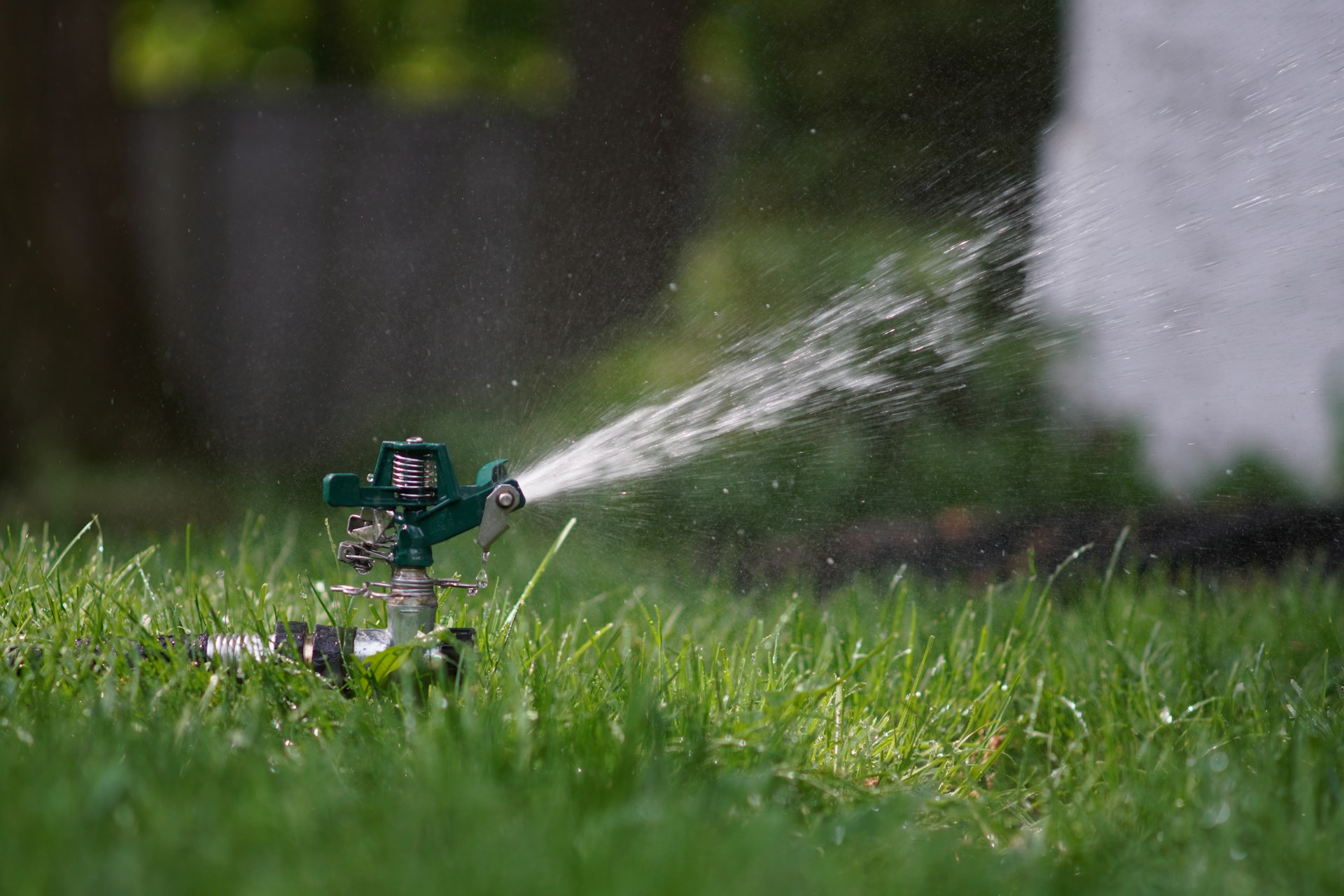
 Photo by Paul Moody on Unsplash
Introduction to Lawn Sprinkler Systems
Lawn sprinkler systems are a critical component of modern lawn care, providing consistent and efficient irrigation to keep grass healthy, green, and resilient. Proper watering supports deep root development, improves drought resistance, and ensures uniform growth across the entire lawn. A well-designed sprinkler system eliminates guesswork, reduces water waste, and saves time compared to manual watering methods.
Understanding how lawn sprinkler systems work, the different types available, and how to maintain them allows homeowners to optimize lawn health while conserving water and lowering utility costs.
How Lawn Sprinkler Systems Work
Lawn sprinkler systems distribute water evenly across designated areas using a network of pipes, valves, and sprinkler heads. Water is delivered under pressure and released in controlled patterns to match lawn size, shape, and grass requirements. Modern systems often include timers and smart controllers that automate watering schedules based on weather conditions and soil moisture levels.
By delivering water slowly and evenly, sprinkler systems allow moisture to penetrate the soil deeply, encouraging stronger root systems and reducing surface runoff.
Types of Lawn Sprinkler Systems
There are several types of lawn sprinkler systems, each designed for specific lawn layouts, climates, and maintenance preferences. Choosing the right system ensures efficient coverage and long-term reliability.
- In-Ground Sprinkler Systems – Permanently installed systems with underground pipes and pop-up sprinkler heads. Ideal for large or irregularly shaped lawns.
- Oscillating Sprinklers – Portable sprinklers that move back and forth, suitable for rectangular lawn areas.
- Rotary Sprinklers – Use rotating arms to distribute water in circular patterns, effective for medium to large spaces.
- Impact Sprinklers – Durable sprinklers that use a rotating impact mechanism, often used for high-pressure applications.
- Drip Irrigation Systems – Deliver water directly to the soil near roots, minimizing evaporation and water waste.
Benefits of Installing a Lawn Sprinkler System
Installing a lawn sprinkler system offers numerous advantages that contribute to healthier turf and simplified lawn maintenance. Automated irrigation ensures consistent watering regardless of weather fluctuations or busy schedules.
- Consistent Water Distribution – Eliminates dry spots and overwatered areas.
- Water Efficiency – Reduces waste through targeted irrigation and scheduling.
- Time Savings – Automates watering routines and minimizes manual effort.
- Improved Lawn Health – Promotes deep root growth and even turf density.
- Increased Property Value – Enhances curb appeal and landscape functionality.
Choosing the Right Sprinkler Heads
Sprinkler heads play a crucial role in determining coverage efficiency and water distribution. Selecting the appropriate type depends on lawn size, soil type, and surrounding landscape features.
Pop-up spray heads are ideal for small areas and provide precise coverage, while rotary heads are better suited for larger zones that require gradual water application. Adjustable sprinkler heads allow customization of spray patterns to avoid watering sidewalks, driveways, or structures.
Smart Controllers and Timers
Modern lawn sprinkler systems often incorporate smart controllers that adjust watering schedules based on real-time weather data, soil moisture sensors, and seasonal changes. These controllers help prevent overwatering and reduce water bills while maintaining optimal lawn hydration.
Timers allow homeowners to schedule irrigation during early morning hours when evaporation rates are low, maximizing water absorption and minimizing fungal growth risks.
Watering Schedules for Healthy Lawns
Proper watering schedules are essential for maintaining healthy grass. Lawns generally benefit from deep, infrequent watering rather than frequent shallow applications. This encourages roots to grow deeper into the soil, improving drought tolerance.
Most lawns require one to one and a half inches of water per week, including rainfall. Adjusting sprinkler run times based on grass type, soil composition, and seasonal weather conditions ensures efficient water use.
Common Lawn Sprinkler System Problems
Even well-designed sprinkler systems can experience issues over time. Identifying and addressing problems early prevents water waste and uneven lawn growth.
- Clogged Sprinkler Heads caused by dirt or debris.
- Leaks in Pipes or Valves leading to pressure loss.
- Misaligned Sprinkler Heads watering unintended areas.
- Controller Malfunctions resulting in improper scheduling.
- Uneven Water Pressure affecting coverage consistency.
Maintenance Tips for Lawn Sprinkler Systems
Regular maintenance extends the lifespan of lawn sprinkler systems and ensures consistent performance. Seasonal inspections help identify leaks, broken heads, and controller issues before they impact lawn health.
Cleaning sprinkler heads, adjusting spray patterns, and testing zones periodically keeps the system operating efficiently. In colder climates, winterizing the system by draining water from pipes prevents freeze damage.
Water Conservation and Environmental Impact
Lawn sprinkler systems designed with efficiency in mind contribute to responsible water usage. Smart controllers, rain sensors, and drip irrigation components significantly reduce water waste while maintaining lawn quality.
Conserving water not only lowers utility costs but also supports sustainable lawn care practices that protect local water resources and ecosystems.
Professional Installation vs DIY Systems
Homeowners can choose between professional installation and do-it-yourself sprinkler systems. Professional installations offer customized design, precise zoning, and long-term reliability, making them ideal for large or complex landscapes.
DIY sprinkler systems provide flexibility and lower upfront costs for smaller lawns but require careful planning to ensure proper coverage and water pressure.
Long-Term Benefits of Lawn Sprinkler Systems
A properly designed and maintained lawn sprinkler system is a long-term investment in lawn health and convenience. By delivering consistent, efficient irrigation, these systems reduce stress on grass, improve visual appeal, and simplify lawn care routines.
With the right system, smart controls, and regular maintenance, lawn sprinkler systems support lush, green lawns throughout the growing season while promoting efficient water use and sustainable landscaping.