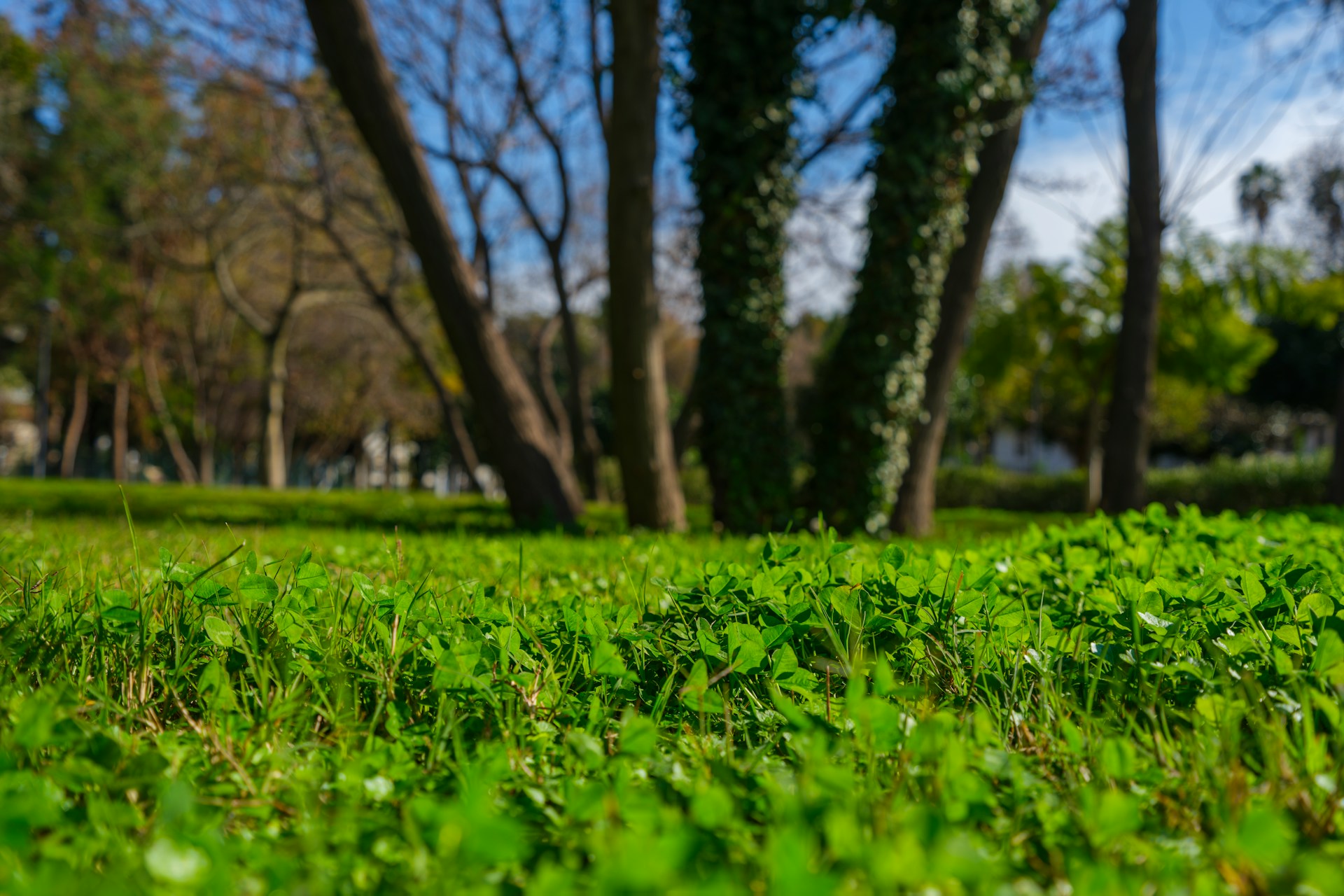
 Photo by engin akyurt on Unsplash
Understanding What Makes a Lawn Naturally Green
A naturally green lawn is the result of healthy soil, strong root systems, proper mowing habits, and balanced nutrition. Grass color is not determined by chemicals alone but by how well the lawn ecosystem functions as a whole. When soil biology, moisture, and nutrients are in balance, grass develops deeper roots and richer green color without relying on synthetic treatments.
Natural lawn care focuses on improving soil health and supporting grass growth through sustainable practices. These methods not only enhance color but also improve lawn durability and resistance to stress.
Improve Soil Health for Deeper Green Grass
Soil quality is the foundation of a green lawn. Compacted or nutrient-poor soil limits root development and reduces the grass’s ability to absorb water and nutrients.
Aerating the lawn allows air, water, and nutrients to penetrate the soil more effectively. This encourages deeper root growth and improves overall lawn color.
Adding organic matter such as compost enriches the soil with beneficial microorganisms. Healthy soil biology improves nutrient availability and supports consistent green growth.
Water the Right Way for Natural Greening
Proper watering plays a major role in lawn color. Shallow or frequent watering weakens roots and causes grass to appear dull and stressed.
Water deeply and infrequently to encourage roots to grow deeper into the soil. Deeper roots help grass access nutrients and moisture more efficiently.
Water early in the morning to reduce evaporation and fungal disease. Consistent watering schedules promote steady growth and greener turf.
Mow Correctly to Enhance Lawn Color
Mowing height has a direct impact on grass health and color. Cutting grass too short weakens plants and exposes soil to heat and moisture loss.
Maintain proper mowing height based on grass type. Taller grass blades capture more sunlight, increasing photosynthesis and natural green color.
Follow the one-third rule by never removing more than one-third of the grass blade at a time. This reduces stress and helps maintain vibrant color.
Leave grass clippings on the lawn when possible. Mulching clippings return nutrients to the soil and improve natural fertilization.
Use Natural Fertilizers and Soil Amendments
Natural fertilization supports steady growth without causing rapid, artificial greening that can weaken grass over time.
Organic fertilizers such as compost, manure, or plant-based products release nutrients slowly. This promotes consistent growth and long-lasting green color.
Soil testing helps identify nutrient deficiencies and pH imbalances. Correcting these issues naturally improves nutrient absorption and lawn appearance.
Balance Soil pH for Maximum Nutrient Uptake
Soil pH affects how well grass absorbs nutrients. Even nutrient-rich soil can result in poor color if pH levels are incorrect.
Adjusting soil pH naturally with lime or sulfur improves nutrient availability. Balanced pH supports healthy roots and greener grass.
Regular soil testing ensures long-term balance and prevents unnecessary treatments.
Encourage Strong Root Growth
Deep, healthy roots are essential for maintaining a green lawn naturally. Strong roots allow grass to withstand drought, heat, and foot traffic.
Avoid overwatering and overfertilizing, as these practices promote shallow root systems.
Allow grass to grow slightly taller to support root development and shade soil, reducing moisture loss.
Control Weeds Naturally
Weeds compete with grass for nutrients, water, and sunlight, reducing lawn color and density.
Dense turf is the most effective natural weed control. Healthy grass crowds out weeds and limits their growth.
Manual removal of weeds during early growth stages prevents them from spreading and damaging lawn color.
Proper mowing and watering reduce weed pressure by maintaining optimal growing conditions for grass.
Improve Sunlight Exposure
Grass requires adequate sunlight to produce chlorophyll, the pigment responsible for green color.
Pruning trees and shrubs increases light penetration to shaded areas.
Selecting shade-tolerant grass varieties improves color in areas with limited sunlight.
Reduce Lawn Stress Naturally
Stress weakens grass and causes discoloration. Common stress factors include heat, drought, heavy foot traffic, and improper maintenance.
Limit foot traffic on stressed areas to allow recovery.
Adjust care routines seasonally to match growth patterns and environmental conditions.
Natural Lawn Care Routine for Greener Grass
- Aerate and improve soil with compost or organic matter.
- Water deeply on a consistent schedule.
- Mow at the proper height and leave clippings when possible.
- Apply organic fertilizers based on soil needs.
- Monitor lawn health and address issues early.
Long-Term Benefits of Natural Lawn Greening
Making your lawn greener naturally leads to stronger grass, improved soil health, and reduced maintenance costs. Natural methods create a sustainable lawn that remains vibrant throughout the growing season.
By focusing on soil health, proper watering, correct mowing, and organic nutrition, homeowners can achieve a lush green lawn without relying on synthetic chemicals. A naturally green lawn not only looks better but also supports a healthier outdoor environment.